Africa’s Fintech Future Was Shaped in Accra
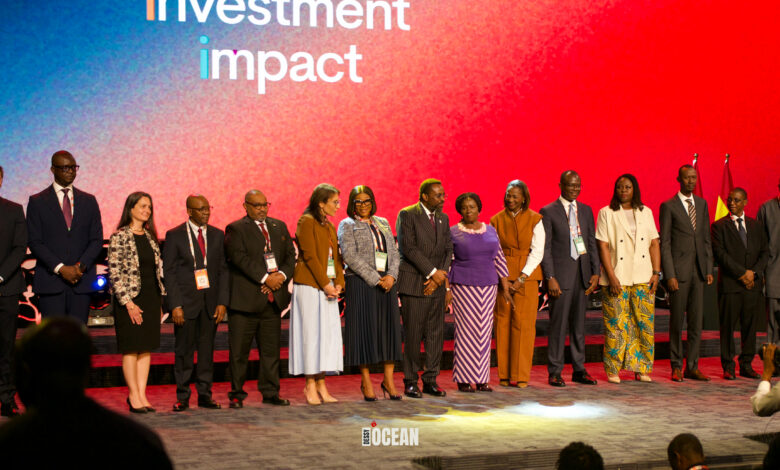
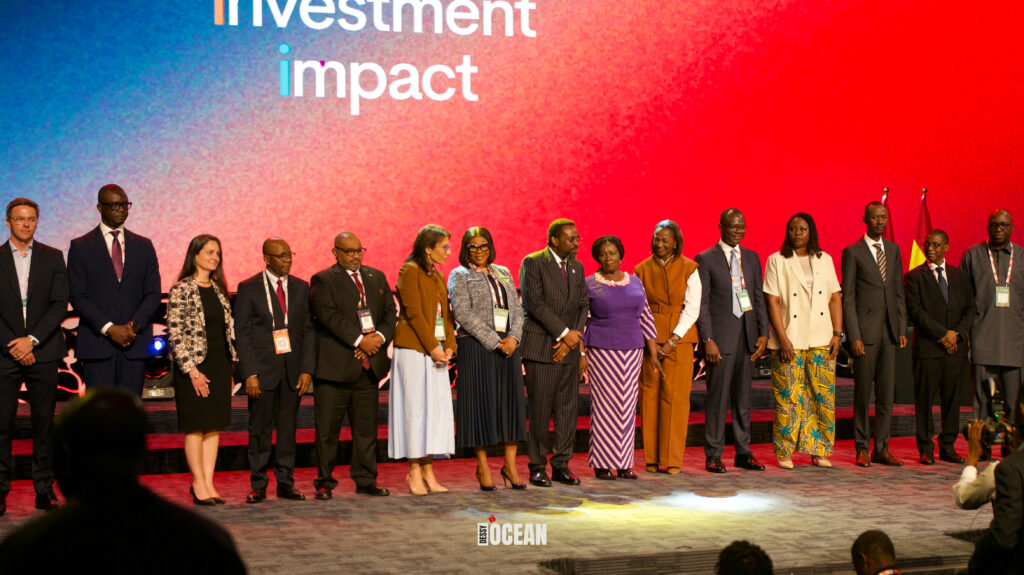
Accra just wrapped up three days of some of the most consequential conversations happening in African digital finance right now. The 3i Africa Summit 2026 – standing for Innovation, Investment, and Impact – ran from May 6 to May 8 at the Destiny Arena, and by the time the final session closed, it had made clear something that has been building for a while: the continent is no longer debating whether to build a digital financial future. It is now arguing about how fast, how safely, and under whose rules.
The summit was organised by the Bank of Ghana in collaboration with the Ghana Interbank Payment and Settlement Systems (GhIPSS), with support from the Global Finance and Technology Network (GFTN). More than 3,000 delegates from over 60 countries attended across the three days – regulators, central bank governors, fintech founders, institutional investors, and ministers of finance and ICT. The theme was “Shaping Africa’s Integrated Fintech Future,” and unlike many summit themes that drift away from the actual agenda, this one held.
Day One: The Infrastructure Argument
The first day set the intellectual frame for everything that followed. The conversations centred on a simple but powerful idea: Africa has built the infrastructure. The question now is whether it can be connected.
GhIPSS CEO Clara Arthur opened with a moment that will stay with anyone who heard it. She described a recent visit to Makola Market in Accra, where she asked a trader how she preferred to receive payment. The trader’s answer was immediate – “mobile money” – without pausing to ask whether the sender was using a bank account or a mobile wallet. She did not care about the mechanism. She just expected the system to handle it.
Arthur used that moment to make her central argument: what that trader’s confidence represents is not just technology adoption. It is trust. And trust, she said, is built through interoperability – through years of collaboration between GhIPSS, the Bank of Ghana, financial institutions, mobile money operators, and fintech firms making the back-end invisible so that the experience for the end user is seamless. “What that moment represents goes beyond technology,” she told delegates. “It represents trust, access and progress.”
That framing – trust as infrastructure – ran through the entire first day.
On the technical side, Arthur announced that GhIPSS is migrating Ghana’s national payment infrastructure to the ISO 20022 global messaging standard. This is a significant move. ISO 20022 is the international financial messaging framework that major economies use to make cross-border transactions richer, faster, and more compatible with global systems. For Ghana, adopting it signals that the country is not building a domestic system that stops at its borders – it is building something designed from the start to plug into a continental and global network.
She also disclosed that GhIPSS is strengthening its domestic card scheme through partnerships with regional and international card operators, and that the institution is positioning itself to work with virtual asset service providers following the passage of the Virtual Asset Service Providers Act. The message to financial institutions and fintech companies not yet connected to the national switch was pointed: get connected, or risk being left behind. Shared infrastructure, she argued, is what reduces duplication and makes scale possible.
Also on the first day, MobileMoney Fintech CEO Shaibu Haruna raised a concern that did not get the headlines it deserved. Africa’s digital credit ecosystem, he said, is entering a new phase driven by AI, rising smartphone usage, and data-driven lending platforms. The speed is extraordinary. “In the time it takes to complete a sentence, thousands of loans can be approved across cities like Accra, Nairobi or Dar es Salaam,” he told the summit. But speed without safeguards, he warned, erodes the trust that makes the whole system work.
His challenge to the room was direct: do borrowers actually understand the interest rates, penalties, repayment timelines, and consequences of default they are agreeing to? Transparent disclosure, fair pricing models, and accessible dispute resolution systems are not optional refinements. They are the foundation of a digital credit market that can sustain itself. For first-time borrowers entering the formal economy through a mobile lending app, getting this wrong has consequences that extend well beyond a bad loan.
The MTN Conversation: What Comes After Mobile Money
MTN Group President and CEO Ralph Mupita joined the summit in a virtual fireside chat moderated by journalist Bernard Avle, and his intervention deserves more attention than the headlines gave it.
Mupita’s core argument was that Africa is entering a decisive second phase in the evolution of digital finance. Mobile money did its job. Over 15 years, it transformed financial access across West and East Africa at a scale and speed that traditional banking could not match – precisely because telecom-led platforms could reach customers at low cost in markets where brick-and-mortar infrastructure was never going to go. He contrasted this directly with traditional financial institutions, which he said have historically faced structural limitations in achieving widespread reach in underserved markets.
But peer-to-peer mobile money transactions are now the baseline, not the frontier. The next phase, he said, will be defined by smartphone-based financial services, app-driven ecosystems, and an expansion into products that were not possible when USSD was the primary channel – nano-lending, cross-border remittances, digital payments, and emerging instruments like stablecoins and crypto-adjacent services. The move from legacy systems to sophisticated integrated platforms is not gradual. AI and rising smartphone penetration, he argued, are compressing timelines that would have taken a decade into something much shorter. “AI and rising smartphone penetration are compressing development timelines and unlocking opportunities that were once expected to take a decade to materialise,” he told delegates.
He was equally direct about what could slow this down. Regulatory fragmentation – the patchwork of national frameworks that make a seamless continental financial system harder to build – needs to give way to greater clarity and regional alignment. He called for regulatory certainty that can support long-term investment, and for frameworks that balance innovation with real consumer protection, particularly around the growing problem of fraud and financial scams. And he was careful on AI specifically: the technology is powerful and useful for fraud detection, credit scoring, and customer service, but human oversight remains non-negotiable for maintaining trust in financial systems.
The Big Announcement: Ghana, Rwanda, Zambia, and a Continental Pilot
If there was a single moment the summit will be remembered for, it was the announcement from Vice President Jane Naana Opoku-Agyemang that Ghana will partner with Rwanda and Zambia to pilot interoperable payment systems, cross-border digital identity recognition, and harmonised electronic invoicing.
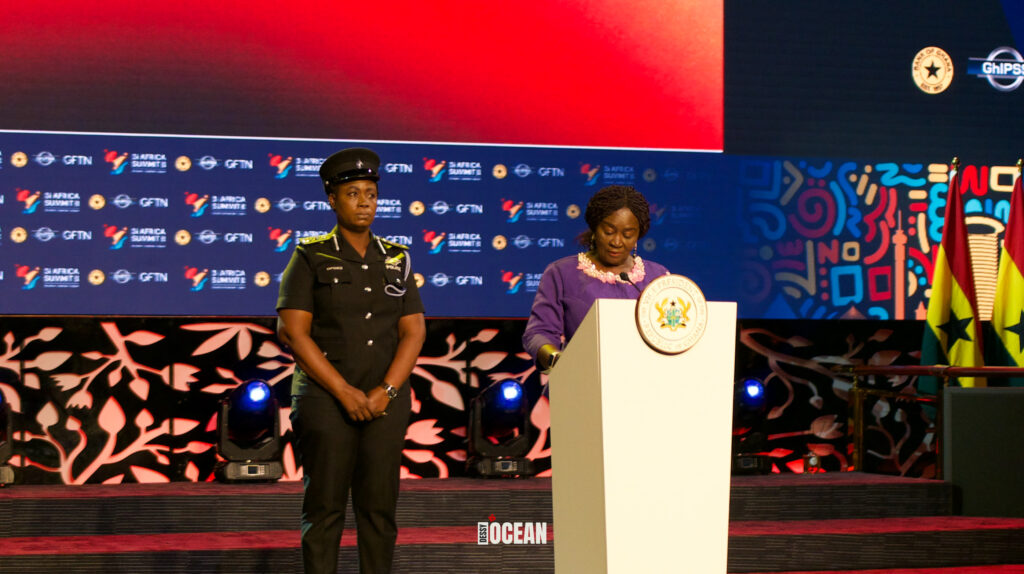
This matters for a reason beyond the announcement itself. The framing the Vice President used was deliberate and careful. A continental gateway, she said, is not a label that a government can claim. It is a system – and a system is measured by whether transactions actually clear, whether businesses can connect easily, and whether markets operate with certainty. That distinction between declaration and delivery has been the fault line in African digital integration for years. Saying it explicitly, at a continental summit, is a commitment to be held accountable to.
Bank of Ghana Governor Dr. Johnson Asiama reinforced the diagnosis from a different angle. The problem is not that Africa lacks payment systems. The problem is that the systems it has built do not talk to each other. “The issue is no longer building systems. It is connecting them,” he told the summit, identifying fragmentation, high transaction costs, and uneven regulatory alignment as the actual constraints holding cross-border digital finance back. The infrastructure exists in patches across the continent. The work now is stitching it together under rules that African countries themselves write.
That last part – under African rules – matters. One of the underlying threads throughout the summit was a quiet but consistent assertion that the architecture of Africa’s digital financial future should be determined by African regulators, African institutions, and African priorities. Not shaped primarily by the requirements of international investors or the standards of systems built for entirely different contexts.
AI: Everywhere, But Watched Carefully
Artificial intelligence was the unavoidable presence at this summit. It came up in sessions on lending, on payments, on fraud detection, on customer service, and in essentially every corridor conversation. The Business and Financial Times described it accurately: AI was less a topic than a lens through which every other topic was being examined.
Africa already accounts for 66 percent of global mobile money transaction value, according to figures cited at the summit. That is an extraordinary baseline. The argument being made across panels was that AI could dramatically extend what is built on top of it – accelerating credit scoring for people without formal financial histories, improving fraud detection in real time, making remittance corridors cheaper and faster, and enabling financial products tailored to the specific patterns of African markets.
But the summit was notably careful about not letting AI become a headline that crowds out harder, less glamorous work. Several speakers made the point explicitly. The foundational challenges – regulatory harmonisation, digital identity systems that work across borders, full adoption of the Pan-African Payment and Settlement System (PAPSS), transparent consumer protection frameworks – do not become easier to solve because AI exists. In some ways, AI accelerates the consequences of getting them wrong. Faster lending at scale with poor consumer disclosure does not become acceptable because an algorithm approved the loan.
The summit’s implicit challenge to the sector was this: AI can compress timelines and expand what is possible, but it cannot substitute for the governance, the regulatory alignment, and the infrastructure investment that genuine integration requires. The technology is the accelerant. The foundations still have to be built.
What This Summit Represents for Ghana
It is worth stepping back and noting what it means that this summit happened in Accra, organised by Ghanaian institutions, and drew the calibre of participants it did.
The 3i Africa Summit is only in its third year. It launched in 2024, and has moved quickly from a promising idea to a genuinely important continental gathering. The fact that central bank governors, fintech CEOs, ministers, and heads of state are showing up – and that the conversations are substantive rather than ceremonial – reflects something real about Ghana’s positioning in African digital finance and about the maturity of the ecosystem that has developed here.
Ghana’s role as a continental convener is not accidental. It is the product of years of deliberate work by GhIPSS, the Bank of Ghana, and the fintech community to build infrastructure, pass enabling legislation like the Virtual Asset Service Providers Act, and create the conditions for that Makola trader to trust mobile money without thinking twice. The summit is both a reflection of that work and a lever for extending it across the continent.
The Honest Assessment
The commitments made at the 3i Africa Summit 2026 are meaningful. The Ghana-Rwanda-Zambia payment pilot, the ISO 20022 migration, the push for PAPSS adoption, the calls for consumer protection frameworks that actually protect – these are not vague aspirations. They are specific, implementable, and in some cases already underway.
But the gap between what gets announced at summits and what gets delivered has historically been wide. The Bank of Ghana Governor was honest about this when he said the issue is no longer building systems. It is connecting them. And connecting systems requires not just technical work but sustained political will, regulatory cooperation across sovereign states, and private sector investment that has to see a return.
The 3i Africa Summit cannot do that work itself. What it can do – and what the 2026 edition did – is create the shared understanding, the relationships, and the public commitments that make the work harder to walk away from. It puts names and faces and specific agreements on record in a way that a press release or a policy document does not.
Whether the systems in Accra, Kigali, and Lusaka can actually exchange value reliably, at low cost, under African rules – that is the test. The Destiny Arena set the direction this week. The real verdict comes in the months that follow.

